Pope Leo Calls For 'Slower Pace' Of AI Adoption, Says It Makes War More 'Feasible'
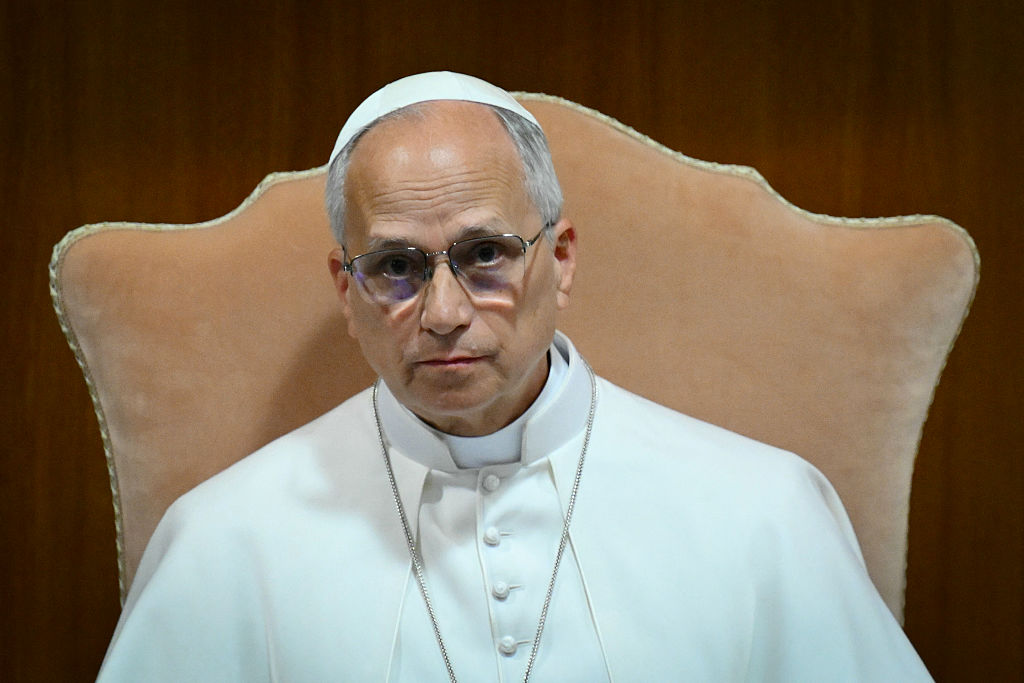
Pope Leo XIV has issued one of the most significant Vatican statements on technology in decades, calling for a 'slower pace' of AI adoption and warning that artificial intelligence is making war more 'feasible' and concentrating power in the hands of a few.
The document, released alongside input from Christopher Olah — co-founder of AI safety company Anthropic — represents a remarkable intersection of religious moral authority and technical expertise. It arrives at a moment when governments worldwide are scrambling to regulate a technology that is outpacing their ability to understand it.
But the Pope's call carries weight that no tech CEO's testimony before Congress can match, and it raises questions that the AI industry has been remarkably reluctant to confront.
## What the Vatican Actually Said
The statement is nuanced in a way that media headlines have largely missed. Pope Leo did not call for a ban on AI or a halt to development. Instead, he made a measured case that speed is not the same as progress.
'Calling for prudence, rigorous evaluation and even, at times, a slower pace in adopting AI does not mean opposing progress,' the pontiff wrote. 'It is an exercise of responsible care for the human family.'
On autonomous weapons specifically, the language sharpened considerably. The Pope warned that AI makes war more 'feasible and less subject to human control,' calling for 'the most rigorous ethical constraints' on military AI applications. He described a world 'slipping into a violent culture of power, where peace no longer appears as a responsibility to be taken on, but as a fragile interval between conflicts.'
Perhaps most strikingly, the document argued that who gets to decide AI's moral framework matters as much as the framework itself. 'A more moral AI is not enough if that morality is determined by a few,' Pope Leo wrote — a direct challenge to the concentration of AI development among a handful of corporations and the governments that subsidize them.
## The Anthropic Connection
The inclusion of Christopher Olah as a collaborator is significant and worth understanding. Anthropic, which Olah co-founded, has positioned itself as the 'safety-focused' AI company — the one that takes existential risk seriously. The Vatican partnering with an AI safety researcher rather than an AI builder sends a clear signal about which perspective the Church prioritizes.
Olah's involvement also underscores a reality the AI industry prefers to keep quiet: even people building these systems have deep concerns about their trajectory. The document acknowledges that 'technology should not be considered, in itself, as a force antagonistic to humanity' — but it clearly states that technology without democratic oversight and ethical guardrails is exactly that.
## The Political Timing Is Impossible to Ignore
The Vatican's statement landed just days after President Donald Trump abruptly postponed a planned executive order on AI regulation, telling reporters he 'didn't like certain aspects' and feared it could slow the United States in its race against China. 'I think it gets in the way of, you know, we're leading China, we're leading everybody, and I don't want to do anything that's going to get in the way of that lead,' Trump said.
The contrast could not be starker. The Pope is calling for deliberation and democratic input; the White House is calling for speed and competitive advantage. They are having the same conversation from opposite conclusions.
And the White House is not alone in prioritizing speed. China, the EU, and dozens of nations are racing to develop AI capabilities — the $9 billion the White House is requesting for intelligence community AI chips is just one data point in a global arms race that shows no signs of slowing.
## What This Means For You
The Pope's intervention in the AI debate is not abstract theology — it has direct implications for how technology shapes your daily life.
**AI regulation is not just a tech issue — it's a civic one.** The Vatican's insistence that 'morality determined by a few' is insufficient means your voice matters. Pay attention to local and national AI policy discussions. Call your representatives. The frameworks being built now will govern how AI affects your job, your privacy, and your safety for decades.
**Autonomous weapons are not science fiction.** The Pope specifically called out the 'growing ease' of deploying autonomous weapons. Multiple nations are actively developing AI-powered military systems. Understanding this reality — and advocating for human oversight — is not alarmism; it's responsible citizenship.
**The 'speed versus safety' debate is not going away.** Every time you use an AI tool that was rushed to market, you're participating in this debate whether you realize it or not. Choosing tools from companies that prioritize safety testing over speed sends a market signal.
**Your job may be affected sooner than you think.** The concentration of AI power the Pope described means that decisions about automation, surveillance, and data rights are being made by a small number of companies. If your industry is being reshaped by AI, now is the time to upskill, not after the disruption hits.
Editorial Team
Originally sourced from International Business Times
Related Stories
YouTube is testing an AI search mode that \'feels more like a conversation\'
A new feature called Ask YouTube will let you pose complex questions and receive...
YouTube is testing an AI-powered search feature that shows guided answers
YouTube is rolling out the new AI search feature to Premium subscribers in the U.S. on an opt-in bas...
YouTube is giving creators a new weapon against AI deepfakes
YouTube is rolling out a new AI safety feature that could help creators spot deepfake-style videos u...