I just tested the next-generation of Android Auto, and it's a huge leap forward that embarrasses Apple CarPlay
Android Auto's Next Generation Embarrasses Apple CarPlay — And It's Not Even Close
Google just showed off the future of in-car computing at its I/O developer conference, and if you're an Apple CarPlay user, you might want to look away.
The next-generation Android Auto, paired with the updated Cars with Google built-in platform, represents a fundamental shift in how we think about the software that runs our vehicles. This isn't an incremental update with a fresh coat of Material Design paint. It's a complete rethinking of the in-car experience — one that makes Apple's CarPlay look like a smartphone projection from 2016, because that's essentially what it still is.
Immersive Navigation Changes the Game
The centerpiece of the update is Google Maps' Immersive Navigation, which delivers a detailed 3D view that includes lane markings, traffic lights, stop signs, and building outlines. This isn't just eye candy — it's the kind of contextual information that reduces missed turns and last-minute lane changes. Apple Maps has improved significantly over the years, but it still operates on a flat, 2D map paradigm that feels increasingly dated compared to what Google is now offering.
The 3D view isn't limited to Google's own cars with Google built-in. It's coming to the Android Auto phone projection experience as well, meaning anyone with a compatible Android phone and a relatively recent car display will get this upgrade without buying a new vehicle.
Material 3 Expressive: Actually Designed for Driving
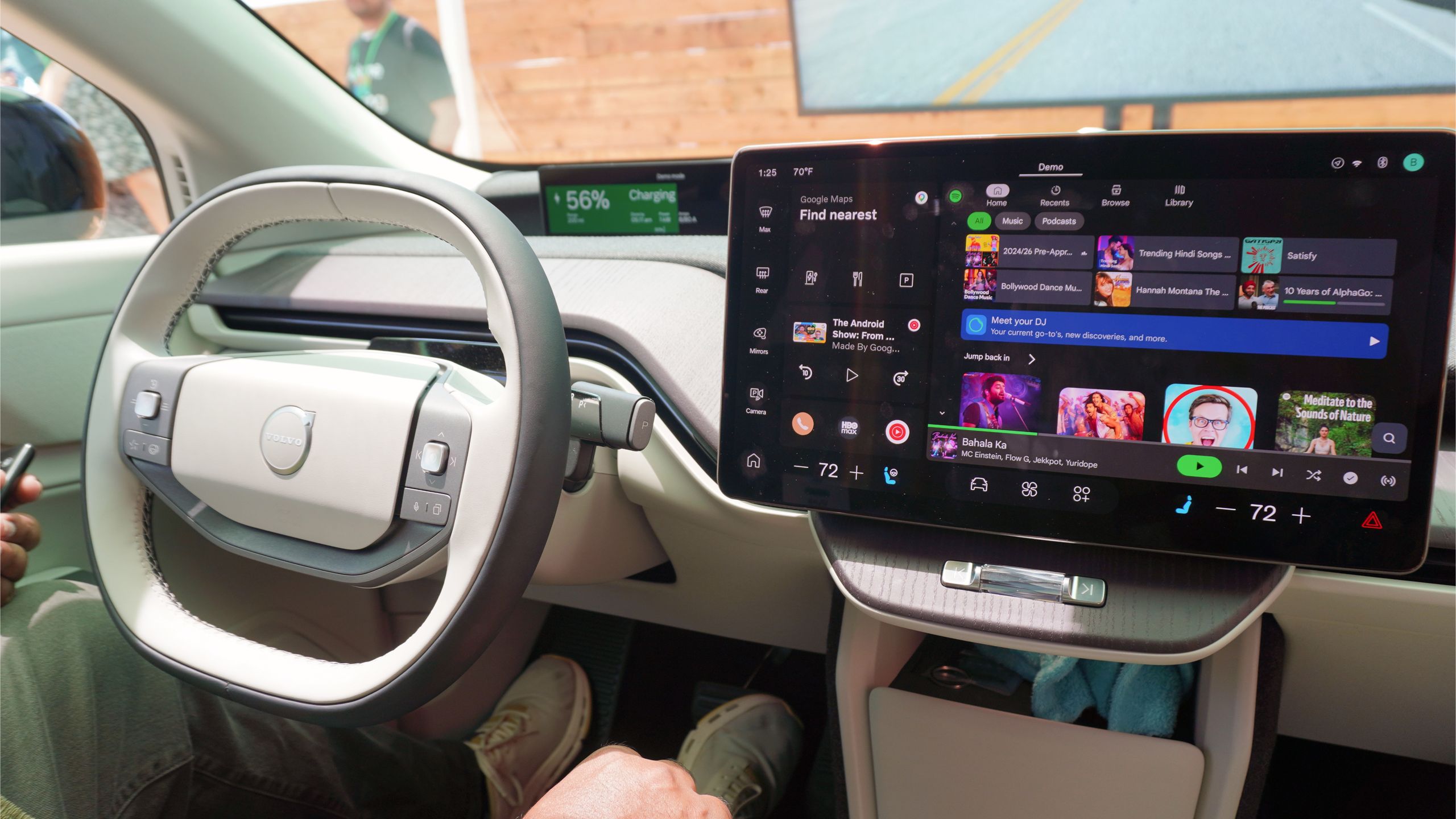
Google's new Material 3 Expressive design language is purpose-built for the car. The interface uses multi-widget layouts that let you see navigation, music controls, and incoming messages at a glance without switching between full-screen apps. This is something CarPlay still struggles with — Apple's interface still largely forces you into one app at a time, with only small notification banners for everything else.
The widget approach is genuinely better for driving. When you're on the highway, you don't want to tap between Maps and Spotify. You want both visible simultaneously, with large touch targets that don't require precision. Material 3 Expressive delivers this, and it's the first time an in-car UI feels like it was designed by someone who actually drives.
Gemini as Your Car Butler
This is where the gap between Android and Apple becomes a canyon. Google's Gemini AI assistant, integrated directly into the car experience, can now take agentic actions — not just answering questions, but actually doing things. In a demo at I/O, Gemini ordered a DoorDash meal for when the driver arrived home and adjusted Google Home smart devices, all through voice commands.
Even more impressive on cars with Google built-in: Gemini can tap into the vehicle's own sensors and controls. It can identify which lane you need for your exit using the car's cameras, adjust the sunroof transparency, change climate settings, and modify cabin lighting — all through natural language. "Make it warmer in here" actually does something, rather than just showing you the climate control screen.
Apple's Siri, by comparison, can set reminders and send texts. The gap in capability is staggering.
Video and Audio for the In-Between Moments
Google addressed a real pain point: the time you spend parked in traffic or waiting at a charging station. The new Android Auto supports full HD video playback at 60fps with Dolby Atmos surround sound. When you put the car in park, you can watch YouTube or video podcasts. When you start driving, it seamlessly transitions to audio-only. It's a small feature that solves a real problem — and it's something CarPlay has never offered.
The Stakes Are Getting Higher
The in-car software market is becoming a genuine battleground, and Google is pulling ahead with a strategy that mirrors its smartphone playbook: open the platform to third-party hardware makers (starting with XREAL's Project Aura for AR glasses), build deep AI integration, and let the ecosystem do the heavy lifting. Apple, meanwhile, continues to treat CarPlay as a secondary feature of the iPhone rather than a platform in its own right.
What This Means For You
If you're shopping for a new car, the Android Auto vs. CarPlay decision is no longer a matter of which phone you own — it's becoming a question of which ecosystem offers a better driving experience, period. Google's agentic AI, immersive navigation, and multi-tasking interface make a compelling case that Android Auto is now the superior in-car platform, regardless of your phone preference. If you already own a car with Android Auto, expect these updates to roll out over the coming months. If you're in the Apple ecosystem and feeling the pressure, all eyes are on WWDC 2026 — Apple needs a dramatic CarPlay overhaul, or the in-car experience gap will only widen further.
Editorial Team
Originally sourced from Tom's Guide
Related Stories
YouTube is testing an AI search mode that \'feels more like a conversation\'
A new feature called Ask YouTube will let you pose complex questions and receive...
YouTube is testing an AI-powered search feature that shows guided answers
YouTube is rolling out the new AI search feature to Premium subscribers in the U.S. on an opt-in bas...
YouTube is giving creators a new weapon against AI deepfakes
YouTube is rolling out a new AI safety feature that could help creators spot deepfake-style videos u...