AI disruption arrived 6 years early-now executives are drawing the line
A new report from Cognizant delivers a finding that should stop every professional cold: 93% of jobs are already impacted by artificial intelligence, and 30% are now facing what researchers call "existential change." That threshold was originally predicted for 2032. It arrived six years early.
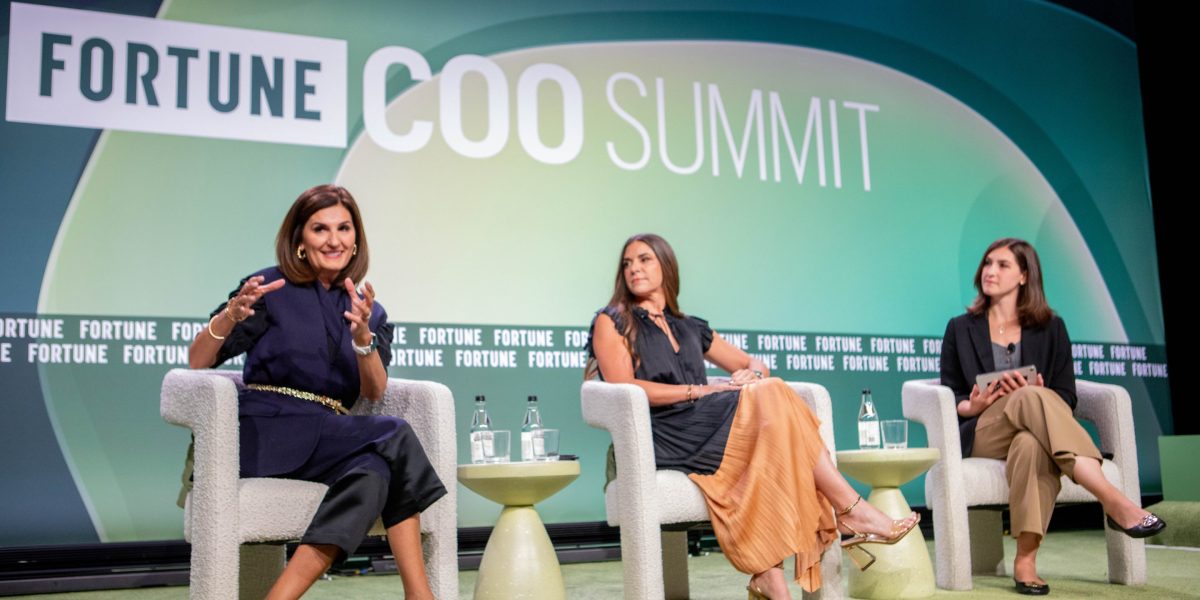
The data, presented at the Fortune COO Summit, underscores a shift that has been accelerating far faster than most expected. When ChatGPT launched in late 2022, the consensus was that AI would be a gradual force — helpful for drafts and summaries, but years away from reshaping the fundamentals of how work gets done. Three and a half years later, that timeline looks comically optimistic. AI agents can now handle complex multi-step workflows, analyze contracts, generate code, diagnose medical images, and even manage workplace communications. The question is no longer whether AI will transform your job, but whether your job will exist in its current form by the end of next year.
Yet the most interesting part of the Fortune summit was not the speed of disruption. It was the pushback. Cisco's chief people officer, Francine Katsoudas, revealed that the company had piloted an AI agent designed to analyze employee communications and diagnose the root causes of workplace conflict. The tool worked. Cisco chose not to scale it. "We believe that's a conversation that a leader needs to have," Katsoudas said. "There can be insights that you decide not to scale."
That decision encapsulates the tension now defining the AI era in corporate America. The technology has outpaced the governance. Companies have the capability to deploy AI in ways that would have seemed dystopian a decade ago — monitoring employee sentiment, predicting which workers are likely to quit, automating the interpersonal work that managers have traditionally done face to face. The fact that Cisco tested and then declined to scale such a tool suggests a growing recognition among executives that just because AI can do something does not mean it should.
But not every company is drawing the line where Cisco did. The same Cognizant research found that while 93% of jobs are touched by AI, the nature of that impact varies wildly. For some roles, AI is an accelerant — helping professionals work faster and with greater precision. For others, it is a replacement, rendering entire skill sets redundant. Administrative roles, data entry positions, and junior-level analysis work are among the most vulnerable. Creative roles, strategic leadership, and relationship management remain harder to automate, though the gap is narrowing.
The governance challenge is multidimensional. On the legal front, companies must navigate a patchwork of regulations that vary by country, state, and industry. The EU's AI Act imposes strict requirements on high-risk AI systems, while the U.S. has taken a more fragmented approach with state-level laws and voluntary industry commitments. On the ethical front, executives are grappling with questions about surveillance, bias, and the responsibility to retrain workers whose jobs are displaced. On the practical front, there is the simple reality that AI systems are imperfect. They hallucinate. They reflect the biases in their training data. They can produce confident-sounding answers that are completely wrong, which is a particular problem in high-stakes domains like healthcare, finance, and law.
What makes this moment different from previous technological upheavals is the speed. The transition from mainframes to personal computers played out over decades. The internet's commercial transformation took roughly fifteen years. AI's impact on the workforce is being measured in months. Workers who trained for careers that assumed a gradual adoption curve are finding that the curve has gone vertical. Retraining programs, where they exist, are struggling to keep pace. Educational institutions are revising curricula, but a four-year degree is a long time in the current environment.
For individuals, the implications are stark. The workers who will thrive in this new landscape are those who can do what AI cannot: make judgment calls in ambiguous situations, build trust through genuine human relationships, and exercise creativity that goes beyond pattern matching. Technical skills alone are no longer a differentiator when AI can write code faster than most developers. The premium has shifted to adaptability, critical thinking, and the willingness to continuously reinvent one's role.
For companies, the challenge is governance without paralysis. Cisco's decision to bench an AI tool that could have saved significant HR time and money was not made lightly. It reflected a calculation that some human interactions are too important to outsource to an algorithm, even a very good one. That calculation will look different at every company, and it will shift as the technology improves and as societal norms evolve. But the fact that it is being made at all — that executives are asking not just "can we?" but "should we?" — is a sign that the AI conversation is maturing beyond pure hype.
The six-year acceleration means that the window for thoughtful adaptation is narrower than anyone expected. Companies that establish clear governance frameworks now will be better positioned than those that wait for regulation to force their hand. Workers who invest in human-centric skills now will have more options than those who wait for the market to decide their fate. And policymakers who move decisively on AI regulation will shape outcomes more effectively than those who treat this as a problem for the next Congress. The future arrived early. The question is whether we will be ready for it.
Editorial Team
Originally sourced from Fortune
Related Stories
YouTube is testing an AI search mode that \'feels more like a conversation\'
A new feature called Ask YouTube will let you pose complex questions and receive...
YouTube is testing an AI-powered search feature that shows guided answers
YouTube is rolling out the new AI search feature to Premium subscribers in the U.S. on an opt-in bas...
YouTube is giving creators a new weapon against AI deepfakes
YouTube is rolling out a new AI safety feature that could help creators spot deepfake-style videos u...