Supreme Court upholds state law on late mail-in ballots
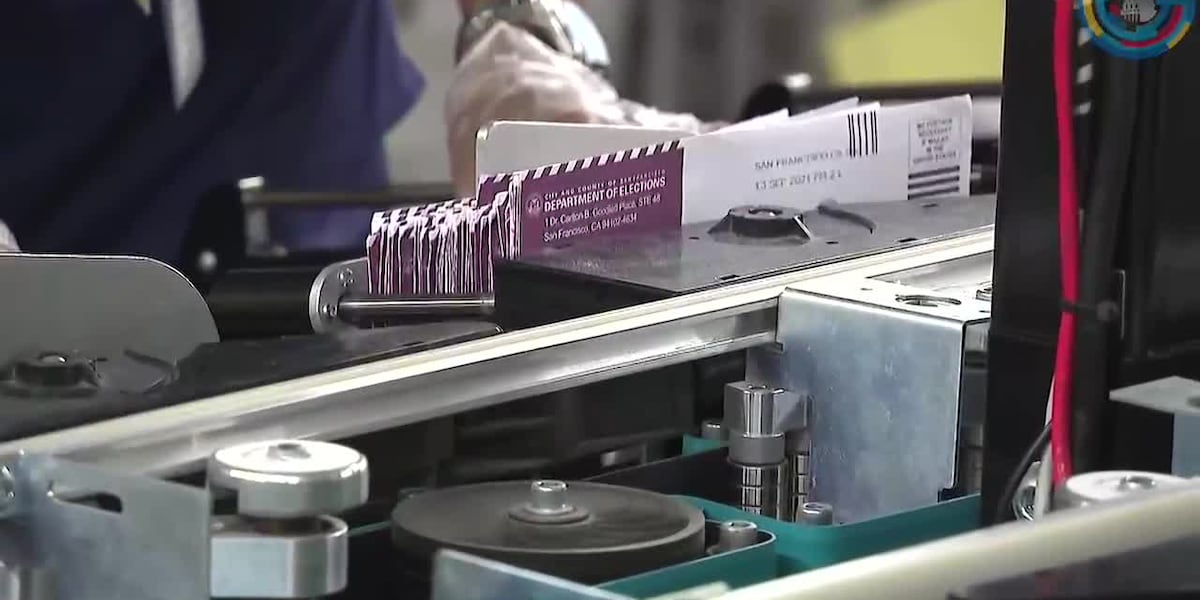
The Supreme Court ruled 5-4 on Monday that states may continue to count mail-in ballots that arrive after Election Day, as long as they were postmarked by the deadline, rejecting a Republican National Committee challenge that could have invalidated millions of votes across the country.
The decision, which upholds a Mississippi statute allowing ballots received up to five business days after Election Day to be counted, has immediate implications for voting procedures in at least 18 states that have similar postmark-based receipt windows. It also represents a significant moment in the ongoing legal and political battles over election administration — one of the most contentious areas of American public policy.
The case, known as Republican National Committee v. Mississippi, centered on whether federal election law preempts state statutes that extend ballot receipt deadlines beyond Election Day. The RNC argued that the Uniformed and Overseas Citizens Absentee Voting Act and the federal election calendar established Election Day as a hard deadline, and that any ballot received after that date — even if postmarked on time — should be disqualified.
Writing for the majority, the Court found that the federal election calendar establishes deadlines for federal offices but does not prohibit states from setting reasonable ballot receipt windows for all elections, including federal contests. The majority noted that Congress has repeatedly been aware of state laws allowing post-Election Day receipt and has not acted to override them, suggesting legislative acceptance of the practice.
The dissent, authored by Justice Thomas and joined by Justices Alito, Gorsuch, and Barrett, argued that the plain text of federal law establishes Election Day as a single, unmovable deadline and that states cannot unilaterally extend it. The dissent warned that the majority's reasoning opens the door to increasingly wide receipt windows that could undermine public confidence in election results.
The practical stakes are enormous. During the 2024 election, more than 6 million ballots were received after Election Day across the 18 states with postmark-based receipt windows. In several close House and Senate races, the late-arriving ballots were decisive in determining the outcome. Invalidating those ballots would have changed the results in at least three congressional districts and one Senate race.
The ruling also has implications for the 2026 midterms and beyond. With the decision now settled, states with postmark-based receipt laws can continue their current practices without fear of federal preemption challenges. States that have been considering extending their receipt windows — including several with Republican-controlled legislatures — now have clearer legal authority to do so.
Election administration experts widely supported the decision. The Brennan Center for Justice, which filed an amicus brief supporting Mississippi's law, noted that postmark-based receipt windows are a practical necessity for a country where mail service varies dramatically by region. Rural areas, tribal lands, and communities with aging postal infrastructure routinely experience delivery delays that are beyond voters' control. Disqualifying ballots because of postal service failures, they argued, amounts to punishing voters for where they live.
The political reaction was predictable and sharply divided. Democratic leaders praised the ruling as a protection for voter access, while Republican officials warned that it creates opportunities for post-election manipulation. Former President Trump posted on Truth Social that the decision "ensures that elections can be stolen after Election Day," a claim that has been repeatedly debunked by state election officials and independent audits.
What is often lost in the political coverage is that mail-in voting is not a partisan phenomenon. In states like Utah, Florida, and Arizona — all of which have robust vote-by-mail systems — Republican voters use mail ballots at rates comparable to or higher than Democratic voters. The practice is popular across the ideological spectrum when it's not framed as a partisan issue. Military voters, seniors, and rural Americans of all affiliations rely on mail-in voting as a primary method of casting ballots.
The decision does not create a free-for-all. States with extended receipt windows still must follow strict procedures: ballots must be postmarked by Election Day, signatures must be verified, and the counting process is subject to observation and audit. The Court explicitly noted that states remain free to set tighter deadlines if they choose, and that the ruling does not prevent states from requiring same-day receipt in the future.
What This Means For You: Your mail-in ballot now has clearer legal protection than it has had in years. If you vote by mail — whether for convenience, travel, disability, or military service — the Court has confirmed that a postmark by Election Day is sufficient, and late delivery by the Postal Service will not disqualify your vote in the 18 states with receipt windows. Check your state's specific deadline at your Secretary of State's website, as the window ranges from one to five business days depending on where you live. If you're in a state without a receipt window, this ruling may give your legislature clearer authority to create one — something worth raising with your state representatives if mail delivery in your area is unreliable.
Senior Political Correspondent
Originally sourced from WEAU
Related Stories
Woman, Her 5 Children Released From Longest ICE Detention of a Family Under Trump
A woman and her five children have been released from Immigration and Customs Enforcement custody af...
Wildfires Abound in US Southeast, Georgia Suffers Record Property Losses
Wildfires are tearing through the US Southeast at an alarming pace, with Georgia hit especially hard...
Why fighting federal-benefit fraud must top the Republican agenda
Expect the fight against fraud to dominate the Republican agenda in Congress and on the campaign tra...