The Texas Senate Runoff Is a Proxy War for the Future of the Republican Party
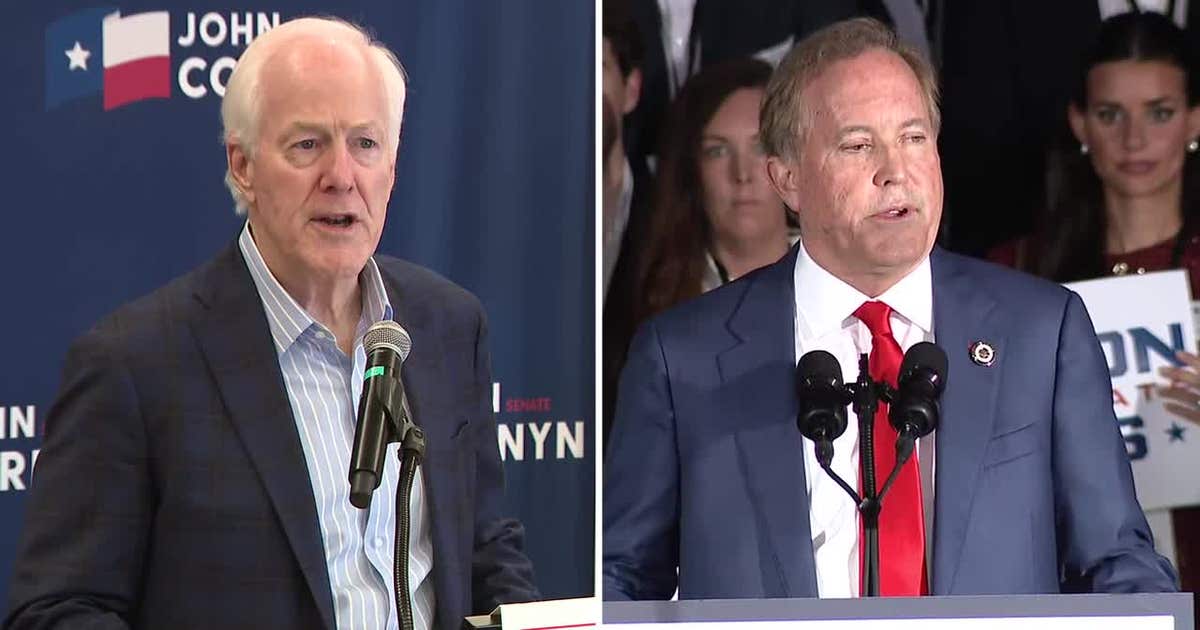
Texas voters went back to the polls on Tuesday to settle one of the most consequential Republican primary runoffs in recent memory: the battle between incumbent Senator John Cornyn and Attorney General Ken Paxton for the GOP nomination for U.S. Senate. But the stakes extend well beyond Texas.
This race has become the clearest test case yet of whether the MAGA wing of the Republican Party can unseat one of its own incumbents — a 22-year Senate veteran with deep ties to the chamber's establishment. The result will shape not just who represents Texas, but what kind of Republican Party emerges from the ongoing internal realignment that has defined the post-Trump era.
**What the race is actually about**
John Cornyn has been a fixture in the Senate since 2002. He's served as Majority Whip, chaired the Senate Finance Committee's subcommittee on trade, and built a reputation as a reliable institutional Republican — one who works within the system, brings home federal dollars, and maintains relationships across the aisle when necessary. In the current political climate, that resume cuts both ways.
Ken Paxton, Texas' attorney general since 2015, represents the opposite approach. He's built his brand on confrontation — suing the Biden administration dozens of times, championing conservative social policies, and positioning himself as a fighter willing to use every legal lever available. He was impeached by the Texas House in 2023 on charges including bribery and abuse of office, then acquitted in the state Senate. That impeachment and acquittal became a central narrative of the campaign: Paxton frames it as political persecution by establishment Republicans, while Cornyn's supporters argue it reflects a pattern of ethical disregard.
The policy differences between the two are less significant than the stylistic and tribal ones. Both candidates support hardline immigration enforcement, oppose abortion access, and align with the Trump administration's priorities. The real question is about tactics: whether Republicans are better served by a senator who can navigate the system to deliver results, or one who will burn the system down to rebuild it in a more combative image.
**The endorsement landscape**
Trump endorsed Paxton, which was always the most likely outcome given Paxton's early and vocal support during Trump's first term and his willingness to use the attorney general's office to advance Trump-aligned legal positions. Cornyn, despite voting with Trump more than 90% of the time during his presidency, never secured the endorsement — a signal that in today's GOP, loyalty is measured by proximity and public alignment, not by voting record.
Cornyn's backing came from the traditional conservative infrastructure: the U.S. Chamber of Commerce, several former Texas governors, and a network of donors who valued stability and predictability. Paxton's support was more grassroots — Trump's endorsement carried enormous weight, but so did the network of grassroots organizers and social media personalities who amplified the anti-establishment message.
**What a Paxton win would mean**
If Paxton prevails, it would represent one of the most significant instances of a Trump-endorsed challenger defeating a sitting Republican senator. The message to every other Republican incumbent would be unambiguous: no amount of institutional power or seniority insulates you from a primary challenge if you're perceived as insufficiently aligned with the party's populist wing.
It would also shift the Senate Republican Conference further toward confrontation. Cornyn is a deal-maker by instinct; Paxton is a litigator. The Senate's legislative math means individual senators have significant power to shape outcomes, and replacing a pragmatic operator with a doctrinaire fighter would have real consequences for how the chamber functions — or doesn't.
**What a Cornyn win would mean**
A Cornyn victory would be a rare instance of the establishment successfully defending its ground against the populist wing. It would suggest that there are still limits to the MAGA coalition's ability to primary its own incumbents, particularly when those incumbents have strong name recognition, deep donor networks, and long track records of delivering for their state.
It would also be a data point suggesting that Trump's endorsement, while powerful, is not absolute. In a general election, the GOP nominee — whoever it is — will be heavily favored in Texas. The real consequence is about the internal balance of power in Washington.
**The broader pattern**
Texas isn't the only state where these dynamics are playing out, but it's the highest-profile example this cycle. The pattern of intraparty challenges driven by ideological purity tests and personal loyalty is reshaping how both parties select their nominees. For Republicans, the question is whether the party's center of gravity has shifted permanently toward a more confrontational style of governance, or whether there's still room for the kind of institutional Republican that Cornyn represents.
**What This Means For You**
If you live in Texas, you've already voted or decided not to — and either way, the result will determine who represents your interests in the Senate for the next six years. If you live anywhere else, this race is a preview of how the Republican Party resolves the tension between its establishment and populist wings. The outcome will affect legislation on immigration, trade, technology regulation, and a dozen other issues that touch your daily life regardless of your state. Pay attention not just to who wins, but to the margin — a close race signals continued internal conflict; a blowout signals the party has made its choice.
Senior Political Correspondent
Originally sourced from FOX 4 News
Related Stories
Woman, Her 5 Children Released From Longest ICE Detention of a Family Under Trump
A woman and her five children have been released from Immigration and Customs Enforcement custody af...
Wildfires Abound in US Southeast, Georgia Suffers Record Property Losses
Wildfires are tearing through the US Southeast at an alarming pace, with Georgia hit especially hard...
Why fighting federal-benefit fraud must top the Republican agenda
Expect the fight against fraud to dominate the Republican agenda in Congress and on the campaign tra...