Lebanon's president meets with Trump in Washington to push for Israeli troop withdrawal
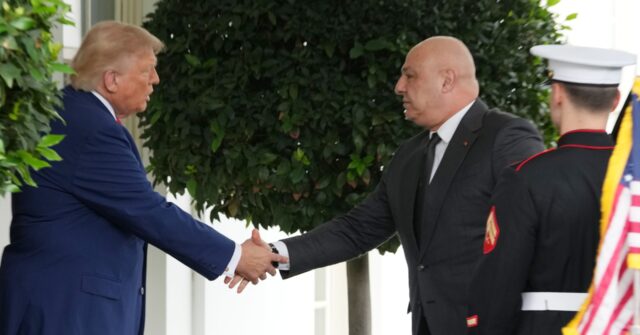
Lebanese President Joseph Aoun sat down with President Donald Trump at the White House on Tuesday, capping a four-day diplomatic push that could reshape the post-conflict landscape in the Middle East. The central ask: a full withdrawal of Israeli troops from southern Lebanon, a demand that has gained urgency as fragile ceasefires continue to hold by a thread.
The meeting comes at a pivotal moment. Israel and Hezbollah traded devastating blows throughout 2024 and into 2025, with Israeli ground operations pushing deep into Lebanese territory. While a US-brokered ceasefire has largely held since late 2025, Israeli forces remain positioned in several southern Lebanese towns — a reality that Lebanon's newly installed president is determined to change.
For Aoun, this is both a diplomatic mission and a domestic necessity. Lebanon's government, still finding its footing after years of political paralysis and economic freefall, needs a visible win. The continued Israeli presence in the south is a daily reminder of the country's vulnerability, and it fuels domestic criticism that the state cannot protect its own territory.
Trump's calculus is different. His administration has consistently framed Middle East policy through the lens of deal-making, and sources familiar with the visit suggest the White House sees an opportunity: leverage the Israeli withdrawal demand to extract concessions from Lebanon on Hezbollah's disarmament and border security arrangements. It's the kind of transactional framework Trump favors — presenting withdrawal not as a concession but as a negotiated outcome.
The politics on both sides are razor-thin. In Lebanon, any agreement perceived as legitimizing Israeli occupation of Lebanese soil would be politically toxic. In Israel, security hawks argue that premature withdrawal hands Hezbollah a propaganda victory and risks re-establishing the infrastructure that enabled the October 2023 cross-border attacks. The Israeli military has publicly stated that any withdrawal depends on verifiable security guarantees.
What makes this moment different from previous diplomatic rounds is Aoun himself. Unlike his predecessors, who governed under Hezbollah's shadow, Aoun — no relation to the former president Michel Aoun — was elected specifically because he represents a break from the Hezbollah-dominated political order. That gives him more room to negotiate on disarmament, but it also means he has less margin for error. If he returns from Washington without a credible commitment on withdrawal, Hezbollah's political rivals within Lebanon will be emboldened, and the fragile national unity government could fracture.
The broader implications extend beyond the Levant. Saudi Arabia and the UAE, both eager to see Iran's influence in Lebanon diminished, have been quietly supporting Aoun's outreach. European diplomats, meanwhile, are watching closely — the EU has committed significant reconstruction aid to southern Lebanon, but that money cannot flow effectively while Israeli troops remain on the ground.
There's also a domestic US angle. Trump has been criticized by both hawks and doves on the Lebanon issue — hawks who want Israel to maintain its buffer zone indefinitely, and doves who argue the occupation is a recruitment tool for extremism. The meeting allows Trump to demonstrate engagement without committing to either position, a familiar playbook from his first term.
The path forward will almost certainly involve phased withdrawal tied to security benchmarks. Israel wants a verification mechanism — potentially including international monitors — before it pulls back from the five towns it still occupies. Lebanon wants an unconditional withdrawal and UNIFIL reinforcement as the security guarantee. Finding the overlap between those positions is the work of the next several weeks.
What This Means For You: The Lebanon-Israel border is one of the world's most volatile flashpoints, and what happens in this negotiation room affects oil markets, regional stability, and the broader trajectory of Middle East peace. If Aoun secures a withdrawal framework, it could unlock billions in reconstruction aid and stabilize a country that has been in economic freefall for five years. If talks collapse, southern Lebanon remains a frozen conflict zone — and the next round of fighting becomes a matter of when, not whether. Either way, the outcome of this meeting will shape US foreign policy in the region for the remainder of Trump's term.
Senior Political Correspondent
Originally sourced from Breitbart News Network
Related Stories
Woman, Her 5 Children Released From Longest ICE Detention of a Family Under Trump
A woman and her five children have been released from Immigration and Customs Enforcement custody af...
Wildfires Abound in US Southeast, Georgia Suffers Record Property Losses
Wildfires are tearing through the US Southeast at an alarming pace, with Georgia hit especially hard...
Why fighting federal-benefit fraud must top the Republican agenda
Expect the fight against fraud to dominate the Republican agenda in Congress and on the campaign tra...