GOP scoffs at Trump's demand to fire Senate parliamentarian
Donald Trump wants the Senate parliamentarian fired. His own party is saying no, and the reason why reveals a deeper tension about how power works in Washington than the president's latest social media outburst suggests.
The parliamentarian, Elizabeth MacDonough, has held the role since 2012, when she was appointed by then-Senate Majority Leader Harry Reid. She is the Senate's nonpartisan rules arbiter, responsible for determining what does and does not qualify under the reconciliation process, the legislative shortcut that allows certain bills to pass with a simple majority instead of the usual 60 votes.
Trump's anger stems from MacDonough's ruling that could strip roughly billion in White House security funding from the One Big Beautiful Bill Act, including million earmarked for a new East Wing ballroom. The ruling also jeopardizes other provisions that Republicans had hoped to pass through reconciliation to avoid a Democratic filibuster.
The Paradox of the Parliamentarian
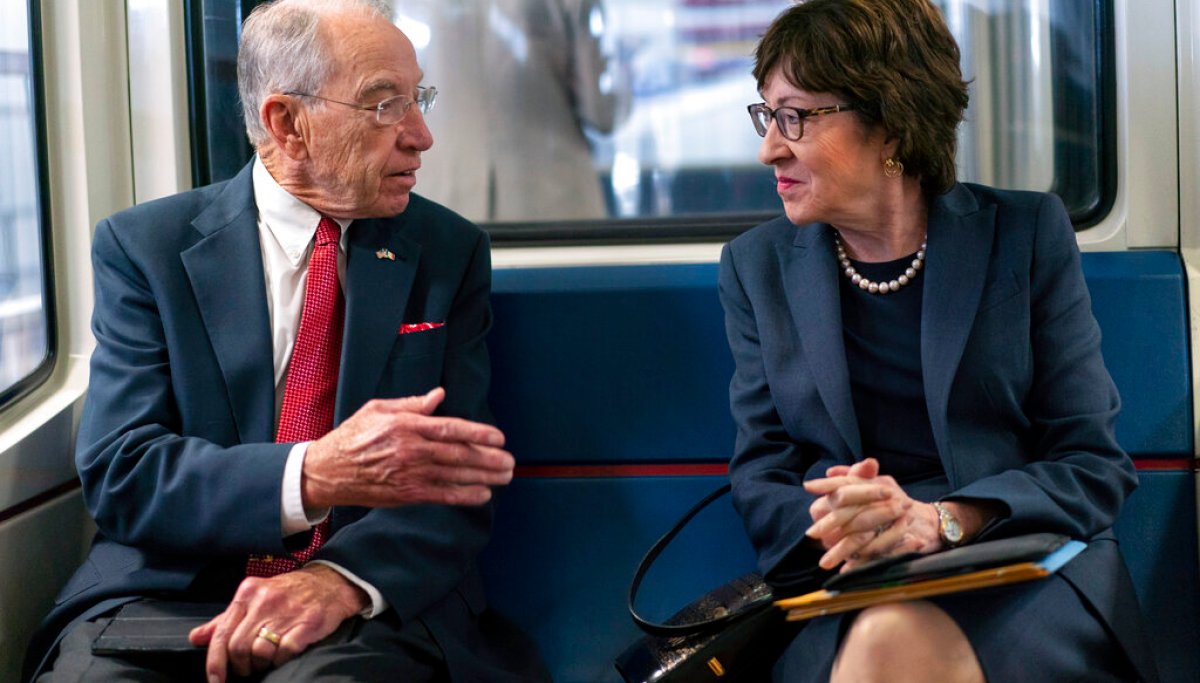
Here is the awkward truth that Trump's Truth Social post glosses over: MacDonough has ruled against Democratic priorities just as often, if not more often, than Republican ones. During the Biden administration, she struck down Democratic attempts to include immigration reform and minimum wage increases in reconciliation bills. Senate Judiciary Committee Chair Chuck Grassley made this point explicitly, noting that the parliamentarian demonstrated during the Biden years that she does not give one party a free pass.
This is not a partisan actor. She is a procedural gatekeeper whose job is to enforce the Byrd Rule, which prohibits extraneous provisions from being included in reconciliation legislation. The rule exists to prevent either party from using the budget process to ram through unrelated policy changes with a simple majority. MacDonough is applying it exactly as designed.
The Real Problem: The Filibuster, Not the Parliamentarian
Senator Ron Johnson of Wisconsin cut through the noise with a diagnosis that is more accurate than Trump's: `She's literally not the problem. The problem is we maintain the filibuster. I'm always looking for root causes.`
Johnson is right. The filibuster, not the parliamentarian, is the structural constraint that Republicans are banging against. Reconciliation is a workaround for the 60-vote threshold, but it only works for provisions that directly affect spending or revenue. Anything else, including much of the One Big Beautiful Bill Act, cannot survive reconciliation scrutiny no matter who sits in the parliamentarian's chair.
Firing MacDonough would not solve this problem. Replacing her with someone more pliable would simply invite a Democratic majority to do the same thing when they next hold the Senate, and the norms protecting the reconciliation process would evaporate entirely. Senate Republicans understand this, which is why Collins, Grassley, and others immediately and publicly rejected the idea.
What This Means For You
The parliamentarian fight is a symptom, not the disease. The disease is the Senate's 60-vote threshold, which forces both parties to use reconciliation as a blunt instrument for passing major legislation. When reconciliation fails to accommodate a party's priorities, the instinct is to blame the referee rather than the rules. But the rules are the problem, and firing the referee does not change them. For anyone tracking whether the One Big Beautiful Bill Act will survive intact, the parliamentarian's rulings are the scoreboard. The game itself is being played on a field designed for a different era, and neither party has the votes to change the dimensions.
Senior Political Correspondent
Originally sourced from Washington Examiner
Related Stories
Woman, Her 5 Children Released From Longest ICE Detention of a Family Under Trump
A woman and her five children have been released from Immigration and Customs Enforcement custody af...
Wildfires Abound in US Southeast, Georgia Suffers Record Property Losses
Wildfires are tearing through the US Southeast at an alarming pace, with Georgia hit especially hard...
Why fighting federal-benefit fraud must top the Republican agenda
Expect the fight against fraud to dominate the Republican agenda in Congress and on the campaign tra...