Why the Strait of Hormuz Crisis Should Terrify Every Business Owner
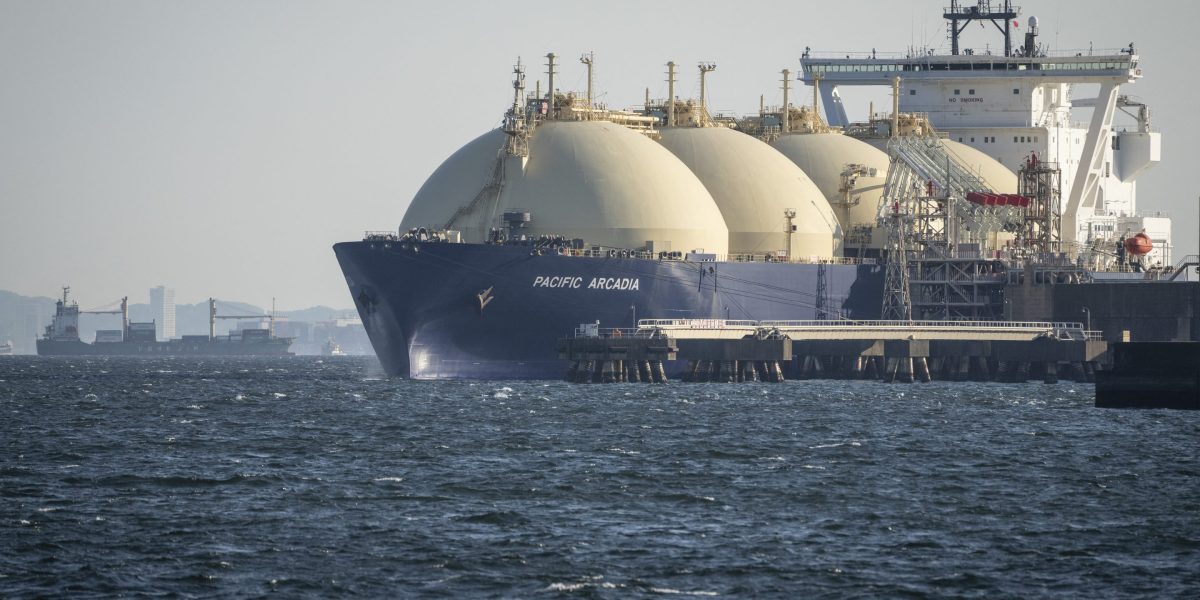
The Strait of Hormuz carries roughly one-fifth of the world's oil supply and a significant share of global liquefied natural gas. For decades, that statistic sat in briefing papers and risk assessments, acknowledged but abstract. The current crisis — with suspected oil slicks near Iran's Kharg Island and escalating regional tensions — has made it violently concrete.
The immediate impact is visible at the pump and in shipping rates. But the cascading effects are what should worry business leaders. Energy shocks don't stay contained in the energy sector. They seep into freight costs, packaging materials, food prices, and insurance premiums. A manufacturer running just-in-time supply chains doesn't just pay more for electricity — they face suppliers who can't deliver, warehouses that cost more to cool, and customers who have less discretionary income.
Here's what makes this crisis different from previous energy disruptions: the economy's dependence on electricity has deepened dramatically. Cloud services, automated logistics, electric vehicle supply chains, data center expansion — all of these require uninterrupted, affordable power. When energy markets convulse, the downstream effects travel faster and hit harder than they did even a decade ago.
The conventional wisdom has been that energy security is a government problem — something for diplomats and strategic petroleum reserves. That assumption is increasingly wrong. National resilience now depends on privately owned infrastructure and corporate decisions. When a major shipping route is threatened, the companies that survive aren't the ones with the leanest cost structures; they're the ones with the most resilient operations.
So what should boards and executives be doing right now?
First, treat energy risk the way you treat cyber risk — as a strategic issue requiring regular stress testing. Model what happens to your business if oil hits $130 per barrel. Which products become unprofitable? Which suppliers fail first? Which customer segments are most exposed? This isn't a hypothetical exercise anymore.
Second, build buffers where disruption causes the most damage. That doesn't mean stockpiling oil or retooling entire supply chains overnight. It means identifying critical vulnerabilities and addressing them: alternate sources for key inputs, backup power generation, longer-term freight contracts. For some companies, it means working closely with utilities and government agencies on contingency planning.
Third, understand your exposure beyond direct energy costs. Many companies think they're insulated because fuel and electricity are a small percentage of their operating budget. But energy volatility ripples through supply chains in ways that aren't immediately obvious. Your exposure might be indirect — a key supplier who can't absorb a price spike, or a customer segment that cuts spending when gas prices rise.
The uncomfortable truth is that efficiency — the gospel of the last decade — looks great in a stable world and dangerous in an unstable one. The companies that outperform in the next decade won't necessarily be the ones with the lowest costs. They'll be the ones that can keep operating when markets turn volatile.
The Strait of Hormuz crisis is a preview. Whether it resolves quickly or drags on, the underlying vulnerability remains. Energy security is no longer someone else's problem.
Finance & Markets Editor
Originally sourced from CoreNewsDaily analysis based on Fortune reporting
Related Stories
Young Voters Squeezed by Economy, Distrust in Political System: Poll
A new Harvard Youth Poll paints a sobering picture of the economic and political landscape facing yo...
World shares are mixed and oil prices jump more than 3% after the UAE says it will exit OPEC
World shares are mixed following a retreat on Wall Street, and oil prices gained on Iran war uncerta...
Will the Economy Cost Republicans the Midterms? New Poll Shows Troubling Signs
A new Fox News poll released this week delivers a sobering message for Republicans heading into the ...