Russia economy minister says 'reserves have largely been used up' while lawmaker warns of revolution
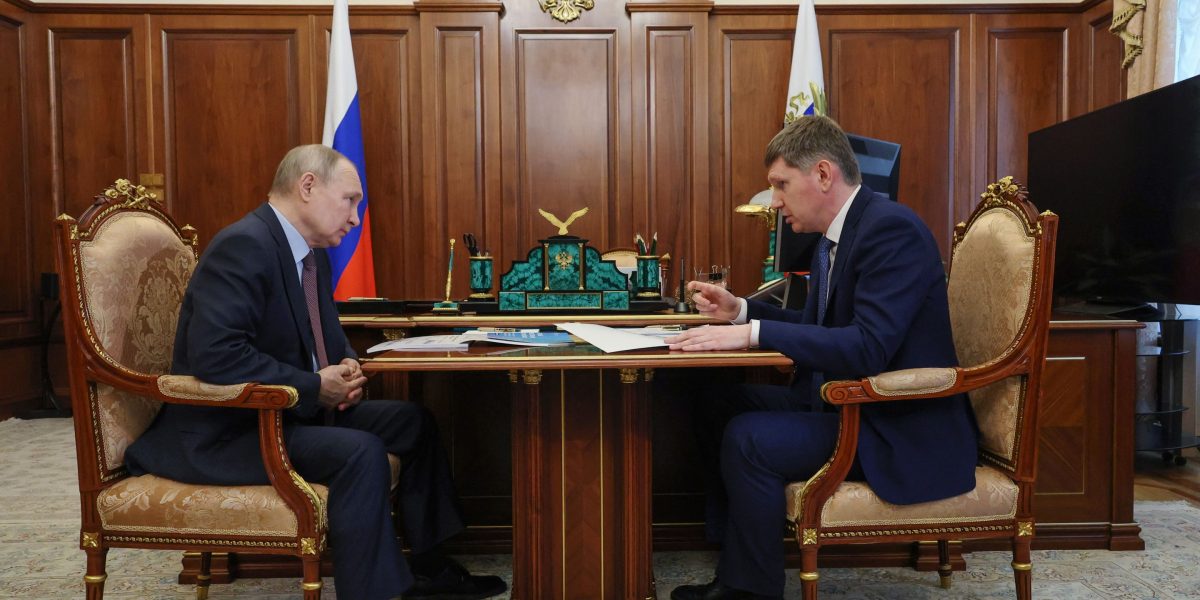
Russia's economy minister has acknowledged that the country's financial reserves have been largely depleted, while a senior lawmaker has warned that failure to adopt emergency economic measures could trigger a repeat of the 1917 revolution by autumn.
The twin warnings — one from a technocrat managing the books, the other from a parliamentarian reading the political temperature — paint an increasingly precarious picture of Russia's economic situation as the conflict with Iran winds down and the long-term costs of sustained military operations continue to mount.
Related
Take Control of Your Money: Top Personal Finance BooksThe right financial knowledge can change your trajectory.
Economy Minister Maxim Reshetnikov's admission that reserves have been "largely used up" confirms what outside analysts have been projecting for months: Russia's National Wealth Fund, which stood at over $190 billion before the Ukraine invasion, has been burned through at an accelerating rate to cover budget deficits, military expenditures, and the economic stabilization measures that have kept domestic conditions from deteriorating further. The fund's liquid assets have reportedly fallen below $50 billion, with the remainder tied up in illiquid corporate holdings that are difficult to convert quickly.
The warning from State Duma deputy Mikhail Matveev is more alarming for its political implications than its economic precision. His reference to 1917 — when economic hardship, food shortages, and war fatigue combined to topple the Tsarist regime — is not a prediction of imminent revolution. It is a signal that elements within Russia's own political establishment are beginning to publicly acknowledge the domestic costs of the government's priorities in ways that were unthinkable even a year ago.
The practical impact extends beyond Russia's borders. A Russia with depleted reserves and rising domestic pressure is both more unpredictable and potentially more constrained. Military spending commitments that were sustainable at $100+ oil prices become harder to maintain as energy revenues compress. Social spending promises made to compensate for the economic dislocation of sanctions and war become harder to fund. The government's ability to weather additional shocks — whether from sanctions escalation, energy price declines, or further military commitments — is diminishing.
The Kremlin's response so far has been a combination of fiscal patchwork — raising taxes on high earners, increasing state borrowing, and drawing down sovereign wealth — and rhetorical discipline, insisting that the economy is stable and that external pressures are being managed. The simultaneous public acknowledgment from both a minister and a lawmaker that the situation is serious suggests that the gap between official rhetoric and economic reality may be widening.
What This Means For You: Russia's reserve depletion matters for energy markets, global security, and investment risk. If you're watching oil and gas, a financially constrained Russia may seek to maintain production volumes to compensate for lower per-barrel revenue, putting downward pressure on prices. If you're tracking geopolitics, domestic economic stress in a nuclear-armed state with an active military is a risk factor that doesn't get enough attention in standard conflict analysis. And if you have any exposure to emerging market debt or Russian-adjacent supply chains, the timeline for potential disruption may be shorter than consensus models suggest.
Related Stories
Young Voters Squeezed by Economy, Distrust in Political System: Poll
A new Harvard Youth Poll paints a sobering picture of the economic and political landscape facing yo...
Will the Economy Cost Republicans the Midterms? New Poll Shows Troubling Signs
A new Fox News poll released this week delivers a sobering message for Republicans heading into the ...
Why Visiting a Tiny Home Village Made Me Rethink Homeownership
For a generation burdened by housing costs, the tiny home movement is offering more than just a life...