Oracle Shares Drop Sharply as Investors React to Large Capital Raise and AI Spending Plans
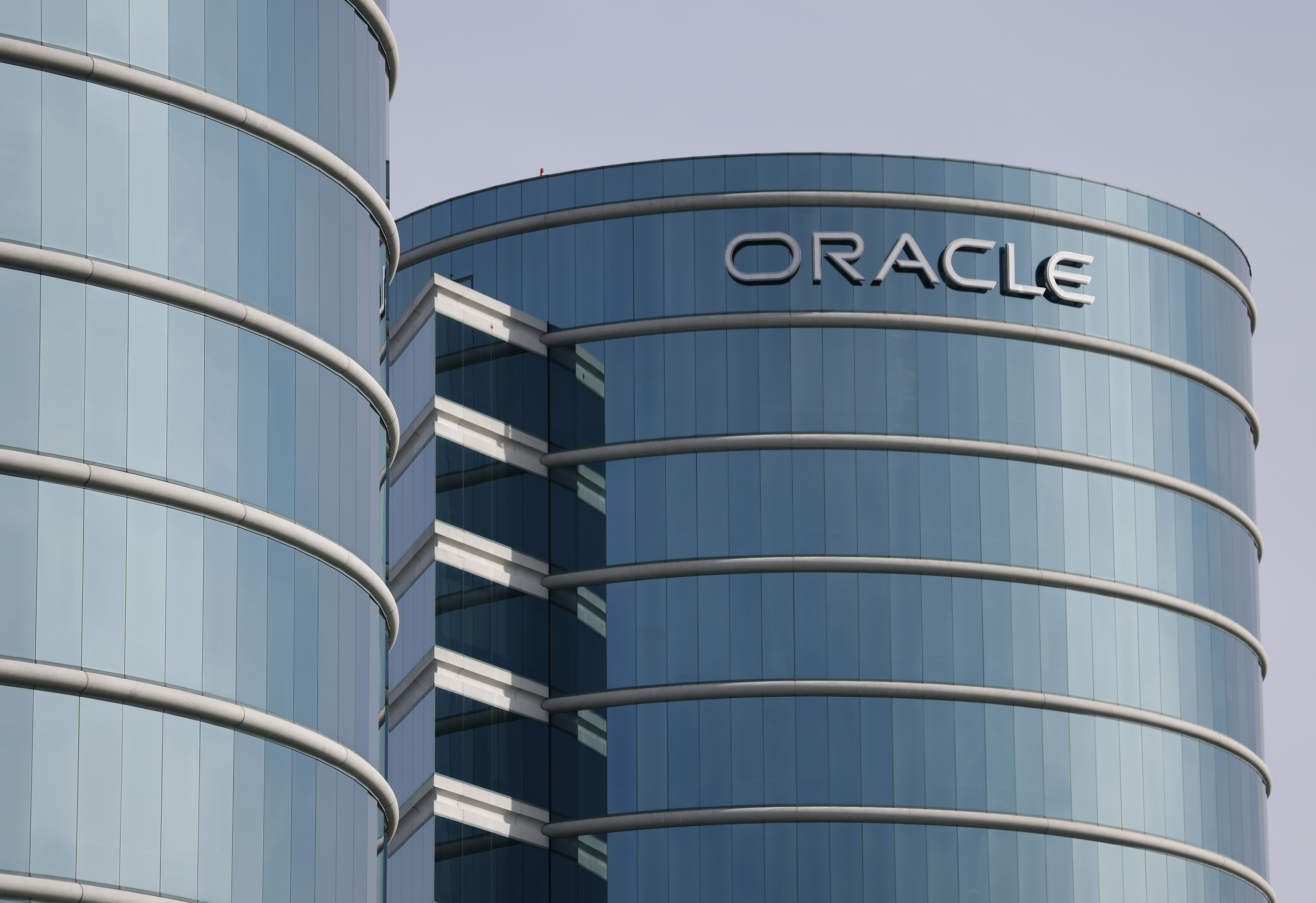
Oracle just became the latest warning sign for the AI spending thesis, and Wall Street is paying attention.
The enterprise software giant's shares plunged 11% on Thursday after the company disclosed plans to raise approximately $40 billion through debt and equity financing to fund its AI infrastructure build-out. The sell-off came despite Oracle reporting quarterly results that beat analyst estimates on nearly every metric — $19.18 billion in revenue and adjusted earnings per share of $2.11, both above expectations.
The market's message was clear: strong results don't matter if the capital required to sustain them is spiraling out of control.
The Oracle selloff is not an isolated event. It's the latest data point in what's becoming an unmistakable pattern of enterprise AI spending hitting a cost ceiling. This morning, Citadel Securities released a macro note warning that AI adoption is slowing due to cost concerns — and Oracle's Thursday implosion is Exhibit A for exactly the dynamic Citadel described.
The Numbers Behind the Crash
Oracle's remaining performance obligations — a measure of contracted future revenue — surged dramatically year-over-year, which would normally be a bullish signal. Cloud services and infrastructure revenue showed strong expansion. The top-line story is fine.
The problem is what lies beneath. Oracle's free cash flow has turned sharply negative as capital expenditures have surged. The company is now planning capital expenditures for fiscal 2027 that could run well above Wall Street expectations, and it needs $40 billion in fresh capital to fund the build-out.
That's not investment. That's a bet. Oracle is essentially telling shareholders that it needs to spend far more than it earns to compete in AI infrastructure, and it's asking them to fund that bet through both dilution and leverage.
The market's reaction — a double-digit percentage decline in a company worth hundreds of billions — suggests investors aren't sure the bet pays off.
Why This Matters Beyond Oracle
Oracle's situation is a microcosm of the broader AI spending question that's now rattling markets. Microsoft cancelled Claude Code for 5,000 employees after token bills blew past budget. Uber burned through its entire 2026 AI coding allocation in four months. Amazon killed an internal AI leaderboard that engineers were gaming. These aren't small companies struggling to afford new tools — they're the wealthiest enterprises on earth deciding the math doesn't work.
The difference with Oracle is scale and signal. When Oracle — a company with $53 billion in annual revenue and a cloud infrastructure business that's supposed to be its growth engine — says it needs $40 billion in outside capital to keep up, the market reads that as confirmation that AI infrastructure is a capital-intensive business with uncertain returns.
And it's not just Oracle shareholders feeling the pain. The company's decline sent ripples through technology stocks broadly, with European software firms also facing downward pressure. Futures on major U.S. indexes declined as the Oracle-driven sell-off weighed on the entire sector.
The $40 Billion Question
Oracle's $40 billion capital raise is not just a financial transaction. It's a statement about the economics of AI infrastructure. The company that pioneered the enterprise database and built one of the most profitable software businesses in history is telling the market that competing in AI requires spending at a level that dwarfs its cash generation.
This raises uncomfortable questions for every company in the AI supply chain:
If Oracle — with its massive installed base, deep enterprise relationships, and profitable legacy business — can't fund its AI ambitions from operations, who can? The answer, increasingly, is that only a handful of companies with the balance sheets to absorb enormous compute costs can play at the frontier. Everyone else either scales back or risks financial instability.
That's exactly what Citadel warned about this morning: frontier AI gets concentrated among a few firms with the capital to eat the cost. Everyone else cuts back. Oracle's stock crash is what that dynamic looks like in real time — a company trying to be in the frontier tier and discovering that the price of admission may be more than shareholders are willing to pay.
The IPO Market Feels the Tremor
Oracle's decline also casts a shadow over the AI IPO pipeline. SpaceX debuted on public markets today, with an expected valuation of roughly $1.77 trillion that leans heavily on the xAI compute business. Anthropic filed a confidential S-1 on June 1 after a funding round that valued it near $965 billion. OpenAI is preparing its own filing.
The bull case for all of these companies depends on the assumption that AI spending will continue to compound indefinitely. Oracle just demonstrated that even the biggest players can hit a wall where spending outpaces cash generation, and the market will punish them for it.
If SpaceX stumbles out of the gate, or if Anthropic's public offering faces similar scrutiny over burn rates, the entire AI investment narrative could shift from "inevitable growth" to "profitability problems" very quickly.
What This Means For You
Oracle's crash is a story about AI spending, but its implications reach much further. Here's what to watch:
If you hold tech stocks or tech-heavy index funds, understand that the AI infrastructure build-out is being financed by enormous capital raises and debt — not organic cash flow. That means higher risk for the sector overall, and it means the companies that can't raise $40 billion at a moment's notice will fall further behind. Diversification across sectors matters more now than it has in years.
If you work in tech, the Oracle news reinforces a trend that's been building for months: companies are getting serious about AI costs. The days of unlimited AI tool budgets are ending. If your company is investing heavily in AI, ask questions about the ROI framework — because the CFO is going to start asking those same questions, and the answers will determine which projects survive.
For everyone else, the Oracle story is a reminder that the AI revolution is expensive, and someone pays. If enterprise customers start cutting back because the costs don't justify the benefits, the growth narrative that's been driving market returns for two years starts to weaken. The AI stocks that have been propping up your 401(k) are making billion-dollar bets that may or may not pay off — and today, Oracle's shareholders are the ones who found out what happens when the market decides the bet is too big.
Finance & Markets Editor
Originally sourced from International Business Times
Related Stories
Young Voters Squeezed by Economy, Distrust in Political System: Poll
A new Harvard Youth Poll paints a sobering picture of the economic and political landscape facing yo...
World shares are mixed and oil prices jump more than 3% after the UAE says it will exit OPEC
World shares are mixed following a retreat on Wall Street, and oil prices gained on Iran war uncerta...
Will the Economy Cost Republicans the Midterms? New Poll Shows Troubling Signs
A new Fox News poll released this week delivers a sobering message for Republicans heading into the ...