Federal Reserve chair Kevin Warsh likely to keep economic independence
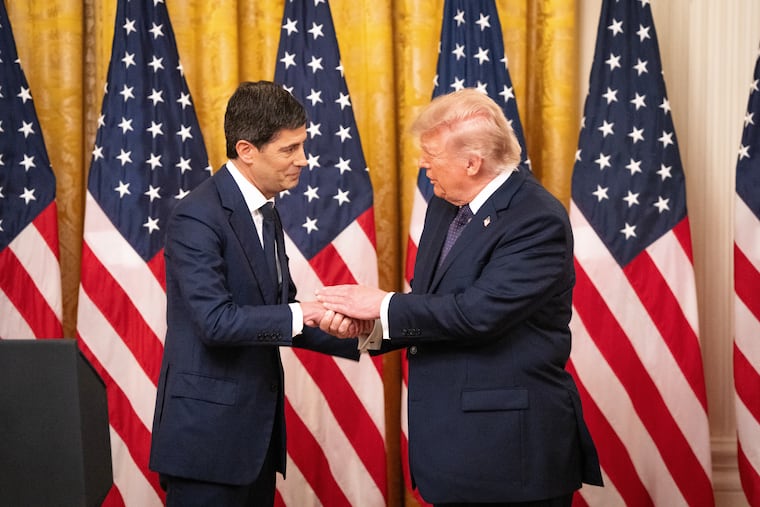
The appointment of Kevin Warsh as Federal Reserve chair has quietly become one of the most consequential economic developments of 2026, and not for the reasons most people are talking about. While headlines focus on interest rate projections and inflation data, the real story is whether the institution that controls America's money supply can remain free from political interference.
The stakes could not be higher. President Trump has made no secret of his desire for lower interest rates, publicly pressuring the central bank and attempting to remove Fed Governor Lisa Cook over allegations of mortgage fraud, the first such attempt to oust a sitting governor in the Fed's entire history. The Justice Department, under White House pressure, opened a criminal investigation into former Chair Jerome Powell. These were not subtle signals. They were direct assaults on the principle that monetary policy should be set by economists, not politicians.
But the walls guarding Fed independence have proven sturdier than many feared. The Supreme Court appears positioned to block Cook's firing, and a federal judge has already quashed the subpoenas issued in the Powell investigation. More importantly, Warsh himself brings credibility to the independence argument. He served as a Fed governor during the 2008 financial crisis under Ben Bernanke, one of the most turbulent periods in modern economic history, and he has long been embedded in global monetary policy circles where central bank autonomy is treated as gospel.
The markets appear to agree. Futures traders are currently betting that the Fed's next move under Warsh will be a rate hike, not the cuts the White House has been demanding. That conviction speaks volumes. If investors believed Warsh would simply do the president's bidding, they would be pricing in cuts. Instead, they are pricing in the opposite, a signal that the financial world takes Warsh's independence seriously.
This matters profoundly for ordinary Americans. The historical precedent is sobering. In the early 1970s, President Richard Nixon pressured Fed Chair Arthur Burns to keep rates low ahead of his reelection campaign. Burns complied. Nixon won a second term, but the resulting inflation, compounded by Middle East oil disruptions, devastated the economy for a decade. It took Paul Volcker's brutal interest rate hikes and back-to-back recessions to finally kill the inflation dragon. The unemployment rate hit 10.8 percent. Families lost homes. Businesses went under. The human cost of politicized monetary policy is not theoretical. It is written in the economic wreckage of the 1970s.
Warsh is not without his critics. He has argued that the Fed communicates too much and that officials should speak less frequently about where rates are headed. This runs counter to the post-2008 consensus that greater transparency reduces market volatility. He has also been a vocal skeptic of the Fed's expanded balance sheet, a stance that dates back to his resignation from the Bernanke Fed over quantitative easing. These positions suggest a chair who may pull back on both transparency and accommodative policy, shifts that could create turbulence of their own.
There is also the structural reality that Powell's decision to remain as a governor through 2028, the first former chair to do so in nearly 80 years, effectively blocked Stephen Miran, a Trump loyalist who supported the president's push for rate cuts, from staying on the board. This was not a symbolic move. It changed the composition of the Fed at a critical moment, preserving a majority that favors data-driven decision-making over political pressure.
The challenge ahead is real. The Fed faces an economy running hot from Iran-war-driven energy inflation, a massive fiscal deficit, and the seismic disruption potential of artificial intelligence. These are not problems that yield to simple rate cuts. They demand nuanced, independent judgment. The early evidence suggests Warsh understands this.
Fed independence is not an abstract principle debated in academic papers. It is the difference between a mortgage rate you can plan around and one that swings with election cycles. It is the difference between stable prices and the kind of corrosive inflation that erodes savings and punishes fixed-income retirees. The Warsh appointment does not guarantee everything goes smoothly, but it does suggest that the guardrails are holding.
For anyone with a savings account, a mortgage, or a retirement fund, that is worth paying attention to.
What This Means For You: The Federal Reserve's independence directly affects your wallet. When politicians control interest rates, they inevitably push them lower before elections, which drives up inflation and erodes your purchasing power. The 1970s proved this the hard way. Warsh's track record and the market's conviction that rates are heading up, not down, suggest the Fed will continue making decisions based on economic data rather than political pressure. That means your mortgage rates, savings yields, and retirement accounts are more likely to reflect economic reality than campaign promises. Watch for Warsh's first major policy announcements to confirm whether this optimism is warranted.
Finance & Markets Editor
Originally sourced from The Philadelphia Inquirer
Related Stories
Young Voters Squeezed by Economy, Distrust in Political System: Poll
A new Harvard Youth Poll paints a sobering picture of the economic and political landscape facing yo...
World shares are mixed and oil prices jump more than 3% after the UAE says it will exit OPEC
World shares are mixed following a retreat on Wall Street, and oil prices gained on Iran war uncerta...
Will the Economy Cost Republicans the Midterms? New Poll Shows Troubling Signs
A new Fox News poll released this week delivers a sobering message for Republicans heading into the ...