Cuba pushes through sweeping free-market reforms in biggest economic shift since the revolution
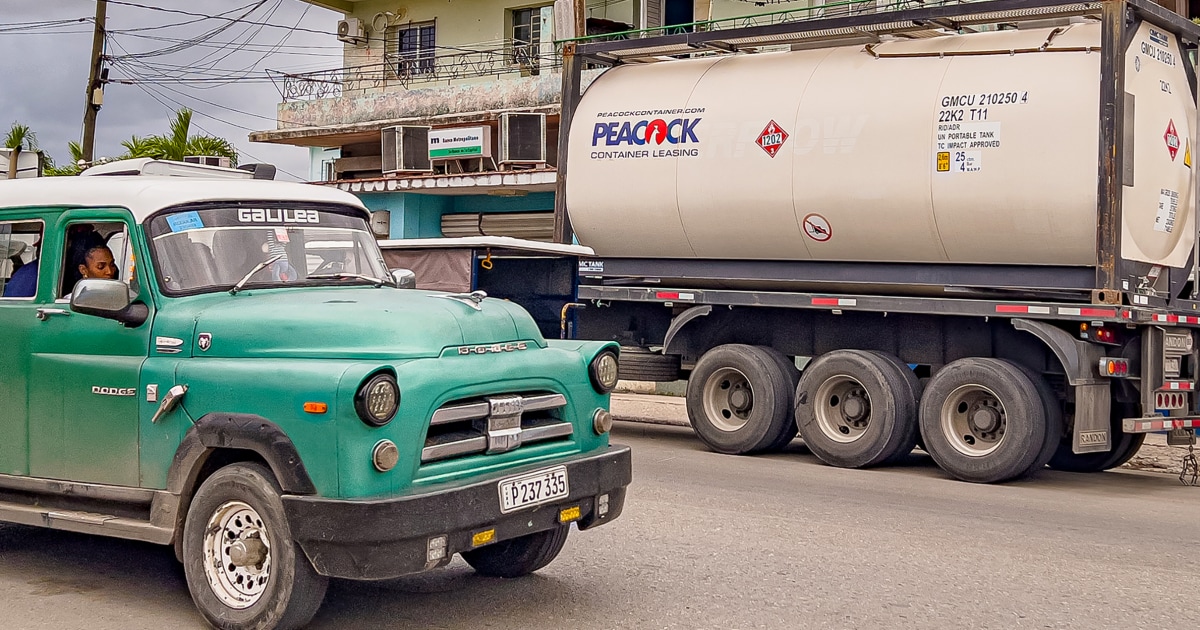
Cuba has announced the most sweeping economic reforms since Fidel Castro's revolution brought communism to the island in 1959. The 176 measures, which include allowing private businesses to operate more freely, permitting imports and exports without state intermediation, authorizing private banking, and even opening the door to fast-food chains, represent a fundamental shift in how Cuba's government approaches economic control.
But the question hanging over every one of those measures is whether they can actually work under the weight of the United States' tightened embargo — and what the implications are for investors, businesses, and the global economy watching from the sidelines.
## What the Reforms Actually Do
The package of 176 measures targets nearly every pillar of Cuba's centrally planned economy. Under the current system, the government largely determines what is produced, who produces it, the prices at which goods are sold, and how resources are allocated. The new reforms aim to decentralize that control.
Key provisions include greater space for private businesses to operate, the ability to import and export goods without state-run intermediaries, free hiring of personnel, authorization for private banking institutions, and explicit permission for Cubans living abroad to invest in the island's economy. Even fast-food chains — a symbol of Western commercial culture that would have been unthinkable on Cuban streets just a few years ago — are now permitted to establish operations.
"Elements that for decades were listed as pillars of the revolutionary economy, such as the state monopoly on foreign trade and the centralization of productive forces, have been dismantled," said Luis Carlos Battista, a Cuban-American political scientist and doctoral candidate at the University of Salamanca.
Cuban President Miguel Díaz-Canel said the measures were based on an analysis of the Vietnamese and Chinese models — communist countries with market economies that have managed to blend political control with economic openness. It's a telling comparison. Both Vietnam and China lifted hundreds of millions out of poverty while maintaining single-party rule. Cuba's leaders are clearly hoping for a similar outcome, though they face obstacles that neither Vietnam nor China had to confront.
## The Embargo Problem
The single biggest obstacle to Cuba's reform agenda isn't internal resistance. It's the United States.
Since January, Cuba has been under a harsh energy and financial embargo imposed by the Trump administration, effectively blocking the island from fuel — its main energy source — and deepening an economic crisis that had already been deteriorating for five years. Blackouts lasting up to 20 hours a day have restricted access to health services, transportation, and education.
Trump and Secretary of State Marco Rubio have acknowledged they are maintaining a policy of "maximum pressure" to change Cuba's political and economic system, which has endured for six decades despite U.S. pressure. They have not ruled out the use of military force.
Lee Schlenker, a research associate at the Quincy Institute in Washington, put it plainly: "With these new measures, along with others that are likely on the table, they will only have a true effect if complemented with the gradual lifting of U.S. prohibitions and sanctions more broadly."
Without sanctions relief, many of the announced measures will be effectively inapplicable. Potential investors face penalties in the U.S. financial system if they do business with Cuba, making the island radioactive for most international capital. No amount of internal reform can attract foreign investment if the cost of investing includes exclusion from the world's largest financial system.
## The Bureaucratic Wall
Even if the embargo were lifted tomorrow, Cuba's reforms would still face a formidable domestic obstacle: the bureaucracy that has grown around six decades of central planning.
Battista, the Cuban-American analyst, described Cuba's administrative apparatus as "slow and inefficient" — a system designed to control an economy, not open one up. Decades of centralized decision-making have created institutional inertia that doesn't disappear with the stroke of a pen.
Cuban authorities themselves cautioned that implementation could be slow. That's diplomatic understatement. When a country has spent 65 years organizing every aspect of economic life through state ministries, the institutional knowledge, infrastructure, and legal frameworks needed to support private enterprise don't simply materialize because the government announces new rules.
Paolo Spadoni, an associate professor at Augusta University, noted that the Cuban government faces a short window for obtaining results. If the reforms don't produce tangible improvements quickly, the gap between public expectations and lived reality could create the kind of social pressure that has toppled governments throughout history.
## Why This Matters Beyond Cuba
Cuba's reforms are not happening in isolation. They come at a moment when the global economic order is under unprecedented strain: trade wars reshaping supply chains, sanctions being used as geopolitical weapons with increasing frequency, and developing nations searching for models that deliver prosperity without sacrificing sovereignty.
The Vietnamese and Chinese models that Díaz-Canel cited are both showing signs of strain. China's property crisis, local government debt, and slowing growth have raised questions about whether its state-capitalist model is as resilient as once believed. Vietnam, while still growing, faces its own challenges as global manufacturers diversify away from China and find alternatives elsewhere in Southeast Asia.
Cuba's experiment — if it can be called that, given the constraints under which it's being attempted — adds another data point to the question every developing nation faces: How do you open your economy without opening yourself to exploitation? How do you invite foreign investment without surrendering control? How do you reform a system that was never designed to be reformed?
The answers matter because there are dozens of countries watching. Nations across Africa, Latin America, and Southeast Asia are grappling with similar questions, and they're watching to see whether a country under maximum economic pressure from the world's largest economy can pull off the kind of structural transformation that has historically required either massive foreign investment or a complete political reset.
## The Geopolitical Calculus
Raul Guillermo Rodriguez Castro, grandson of the revolutionary leader Raúl Castro, reiterated in an interview that Cuba "doesn't even slightly represent a threat" to the United States. The statement is both a diplomatic gesture and a strategic one.
Cuba's leadership is positioning these reforms as evidence that the island is moving in a direction the U.S. has long demanded — toward market openness, private enterprise, and economic liberalization. The implicit argument is that maintaining maximum pressure on a country that is actively reforming undermines the stated goal of that pressure.
Whether that argument gains traction in Washington is an open question. The Trump administration's policy of maximum pressure has shown no signs of softening, and the domestic political calculus around Cuba has never been driven solely by economics.
## What This Means For You
If you're an investor, Cuba's reforms represent a frontier market with enormous potential and equally enormous risk. The opportunities are real: a literate population of 11 million, proximity to the U.S. market, untapped demand in virtually every consumer sector, and now a legal framework that permits foreign investment. But the embargo makes direct investment virtually impossible for U.S. persons and companies, and the risk of sanctions relief not materializing means any capital committed could be locked up indefinitely. Watch for signals from Washington before allocating any capital.
If you're a business owner in logistics, hospitality, agriculture, or financial services, Cuba's potential opening represents a long-term strategic opportunity. The island needs virtually everything: modern banking, supply chain infrastructure, food distribution, telecommunications, and consumer goods. Building relationships and understanding the regulatory landscape now will give you a significant first-mover advantage if and when the embargo eases.
If you're following global markets, Cuba's reform package is a signal that even the most entrenched centrally planned economies are being forced to adapt. The question isn't whether reform will happen — it's whether the pace of reform can outpace the pace of economic deterioration. The next 12 to 18 months will determine whether these 176 measures represent a genuine transformation or a political gesture that runs aground on the rocks of sanctions and bureaucracy.
The most important economic story in the Caribbean isn't about what Cuba is announcing. It's about whether the conditions exist for those announcements to become reality.
Finance & Markets Editor
Originally sourced from NBC News
Related Stories
Young Voters Squeezed by Economy, Distrust in Political System: Poll
A new Harvard Youth Poll paints a sobering picture of the economic and political landscape facing yo...
World shares are mixed and oil prices jump more than 3% after the UAE says it will exit OPEC
World shares are mixed following a retreat on Wall Street, and oil prices gained on Iran war uncerta...
World Bank warns the 2020s are becoming a \'lost decade\' for the global economy - \'barring a miracle\'
Global growth is now projected to slow to just\u00a02.5% in 2026, the weakest pace outside of outrig...