Britain marks Brexit's 10th anniversary with an economy 4%-8% smaller than if it never voted to leave
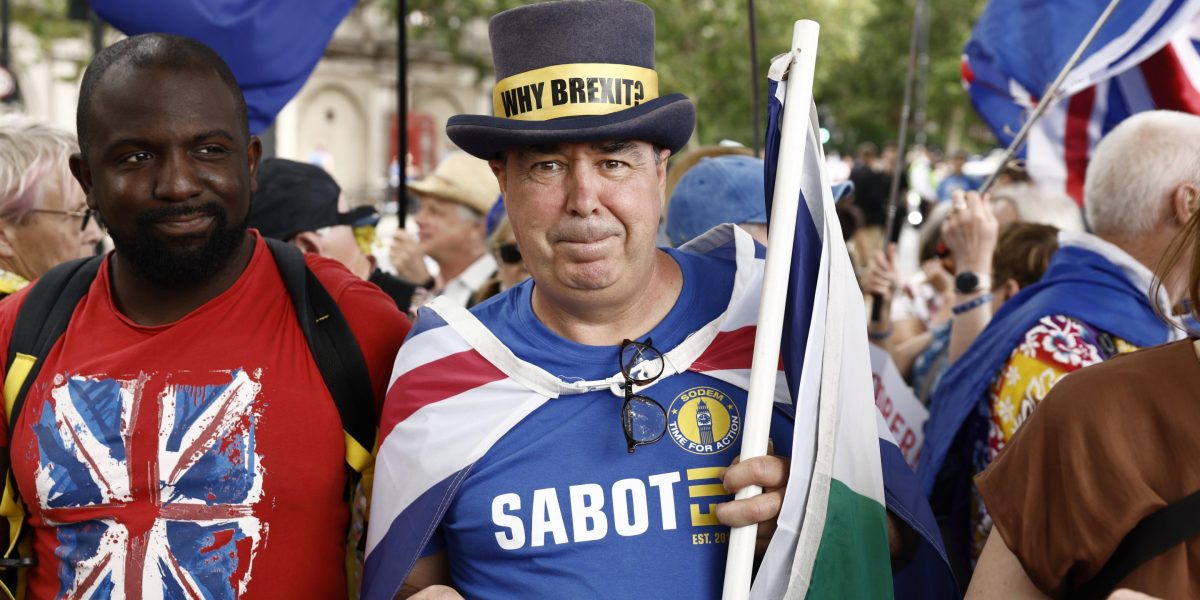
Ten years after 52% of British voters chose to leave the European Union, the verdict of the data is unambiguous: Brexit has cost the United Kingdom between 4% and 8% of GDP, and no amount of creative accounting or wishful attribution to COVID or the Iran war can erase that gap.
The anniversary arrives at a moment when Britain's economic performance is measurable against a clear counterfactual. Economists at the Centre for European Reform, the National Institute of Economic and Social Research, and Bloomberg Economics have all produced models estimating what the UK economy would look like today had the 2016 referendum gone the other way. Their consensus — a GDP loss of roughly £100 billion to £200 billion — represents the most expensive peacetime policy decision in modern British history.
## The Numbers Don't Lie
Trade between the UK and the EU has fallen by approximately 15% relative to what it would have been without Brexit, according to the Office for Budget Responsibility. Foreign direct investment into the UK has declined by roughly 40% from its pre-referendum peak. Business investment, which was growing faster in the UK than in Germany or France before 2016, has lagged behind both since the referendum.
These aren't marginal effects. They represent a structural diminishment of the British economy that compounds over time. A 4% GDP gap today doesn't just mean lower output this year — it means less investment next year, smaller businesses the year after that, and a progressively widening divergence from the trajectory the UK would have been on as a full EU member.
## What Went Wrong: Trade, Investment, and Talent
The mechanics of Brexit's economic damage follow three interconnected channels.
First, trade barriers. Leaving the EU's single market and customs union didn't eliminate trade with Europe — Britain's largest trading partner — but it made it significantly more expensive. The introduction of customs declarations, rules-of-origin checks, and regulatory divergence created friction that disproportionately hurts small and medium-sized enterprises lacking the legal and compliance resources of multinational corporations.
Second, investment diversion. When the UK was inside the EU, it was a natural gateway for global companies seeking access to 450 million European consumers. Without that advantage, many companies have relocated European headquarters to Dublin, Frankfurt, or Amsterdam. The financial services sector alone has seen an estimated £1.3 trillion in assets and thousands of jobs shift to the continent.
Third, talent attrition. Freedom of movement ended with Brexit, and the numbers tell the story: net migration from EU countries to the UK has fallen sharply, while the UK has simultaneously made it harder for skilled workers from around the world to enter. The resulting labor shortages in healthcare, agriculture, hospitality, and technology are not hypothetical — they are documented in the vacancies data every month.
## The COVID and Iran War Distraction
Pro-Brexit voices have argued that Britain's economic underperformance is better explained by the pandemic and the Iran war's disruption of energy markets than by the decision to leave the EU. The data does not support this claim.
Every major EU economy also experienced COVID and the Iran war's energy shock, and their recoveries have been faster and more complete. Germany, France, and the Netherlands — all facing the same global headwinds — have outperformed the UK on growth, investment, and currency stability. The difference between them and Britain is not external events; it's the self-inflicted wound of leaving the world's largest trading bloc.
## The Lesson for Other Movements
Brexit's tenth anniversary arrives at a moment when separatist and sovereignty movements around the world are drawing inspiration from the British example. From Catalonia to Texas, from Scottish independence advocates to those pushing for a Frexit or Nexit, the temptation to frame leaving a larger political union as an exercise in democratic self-determination is powerful.
The data from Brexit should give every one of those movements pause. The economic costs of disentangling from a deeply integrated economic relationship are real, measurable, and compounding. The theoretical benefits of taking back control have been consistently outweighed by the practical costs of losing access to shared markets, shared regulatory frameworks, and shared talent pools.
This doesn't mean that sovereignty arguments are invalid — only that they come with a price tag that proponents have a responsibility to acknowledge and quantify honestly.
## What This Means For You
If you're a British citizen or resident, the economic reality of Brexit is already in your paychecks, your grocery bills, and your career prospects. The UK is roughly £100-200 billion smaller than it would have been, and that gap is growing, not shrinking. The policy choices available now are about damage limitation — rebuilding trade relationships, investing in domestic capabilities, and attracting global talent through competitive immigration policies.
If you're watching from outside the UK, the lesson is clear and transferable: economic integration is easier to dismantle than to build, and the costs of disintegration are paid not by the politicians who promised liberation, but by the businesses that lose markets and the workers who lose jobs.
Ten years on, the data speaks with a clarity that the rhetoric of 2016 never achieved. Brexit happened. The question now is whether Britain — and the rest of the world — is willing to learn from what it cost.
Finance & Markets Editor
Originally sourced from Fortune
Related Stories
Young Voters Squeezed by Economy, Distrust in Political System: Poll
A new Harvard Youth Poll paints a sobering picture of the economic and political landscape facing yo...
World shares are mixed and oil prices jump more than 3% after the UAE says it will exit OPEC
World shares are mixed following a retreat on Wall Street, and oil prices gained on Iran war uncerta...
World Bank warns the 2020s are becoming a \'lost decade\' for the global economy - \'barring a miracle\'
Global growth is now projected to slow to just\u00a02.5% in 2026, the weakest pace outside of outrig...