Bessent Walked Into Warren's Hearing Not Knowing He Was About to Help Her Build the Case That Trump Should Be Investigated
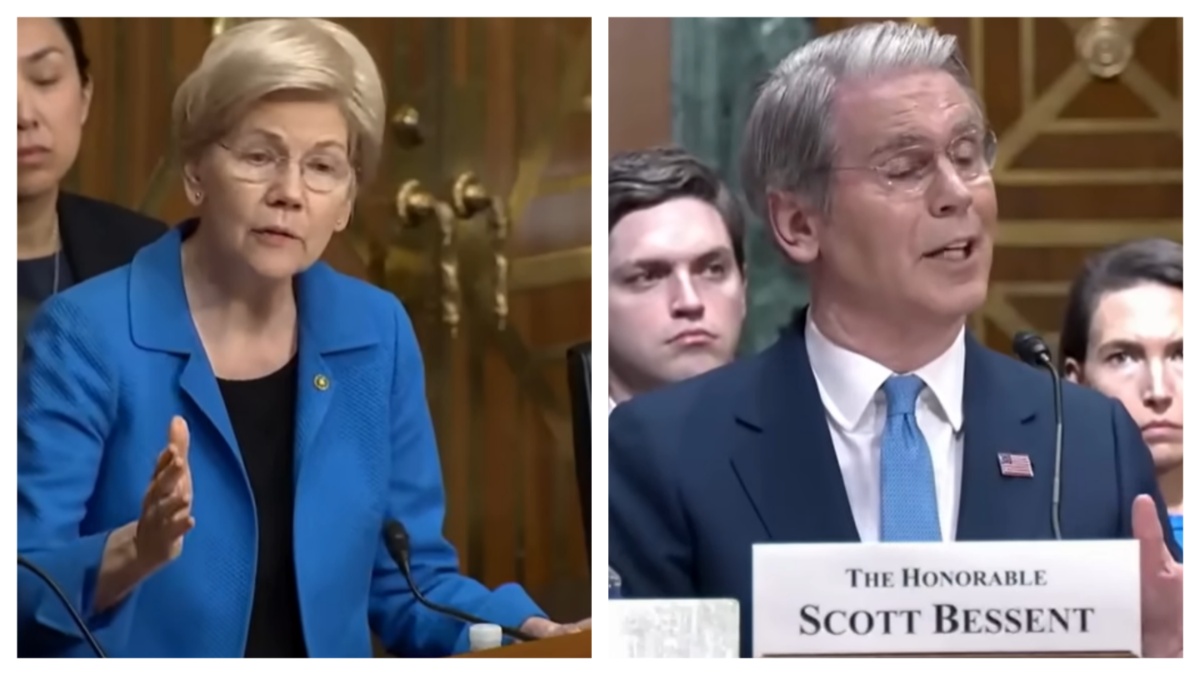
During a Senate Finance Committee hearing on June 3, Democratic Sen. Elizabeth Warren walked Treasury Secretary Scott Bessent straight into a trap of his own making — using his own words against him to expose what she called a brazen pattern of self-dealing by President Donald Trump that would have any private citizen facing an SEC investigation.
Warren opened by reminding Bessent of something he said before he became the man defending the very behavior he once condemned. "Last year, you came out in support of a trading ban for members of Congress," Warren said. "You explained the need for a ban by saying, 'You look at some of these eye-popping returns every hedge fund would be jealous of them.' And that if any private citizen traded that way, 'the SEC would be knocking on their door.'"
Then she dropped the number. "President Trump's latest financial disclosures show that he made more than 3,400 stock trades worth more than a quarter of a billion dollars in just the first three months of 2026. That's roughly half of what all 535 members of Congress made last year combined."
Bessent's defense — that Trump had an outside manager handling the trades and that Congress should get its own house in order first — landed with a thud. Warren wasn't having it.
"You are a Wall Street guy. So you know better. President Trump literally signed a 113-page document publicly listing all of his individual stock trades at the same time that he is making decisions affecting those stocks. So you're going to sit here with a straight face and say it's not a conflict of interest?"
The Numbers That Matter
Warren then laid out specific trades that appear to coincide with major policy decisions. The pattern she described is striking: trades in defense contractors around military funding decisions, trades in energy companies around regulatory actions, and trades in pharmaceutical companies around healthcare policy announcements.
The sheer volume is staggering. More than 3,400 individual trades in 90 days means roughly 38 trades per day, every day, for three months straight. For context, the most active day traders in America might execute 20-30 trades on a volatile day. The president's portfolio was generating more transaction volume than professional traders on a sustained basis.
The Outside Manager Defense
Bessent's argument that Trump uses an outside manager is technically true but legally thin. Having a third-party manager doesn't eliminate conflicts of interest when the person benefitting from the trades is also the person making policy decisions that affect those same stocks. Blind trusts exist specifically to solve this problem — and Trump's arrangement is not a blind trust.
Warren pressed this point directly: "If I traded like this, the SEC would investigate me. If you traded like this before you took this job, the SEC would investigate you. But the president does it, and you're telling me it's fine because he has a manager?"
The implication is clear. The "outside manager" is a fig leaf, not a firewall. The president knows what companies are in his portfolio, knows what policy decisions he's making, and benefits from the results regardless of whether he's personally clicking "buy" on a trading app.
Why This Matters Beyond the Hearing Room
The Bessent-Warren exchange highlights a structural problem that goes well beyond Trump. Members of Congress, their spouses, and their staffs routinely make stock trades that appear to track with legislative activity. The STOCK Act of 2012 was supposed to address this, but its disclosure requirements are weak and its enforcement provisions are virtually nonexistent.
Warren's point about Trump's trading volume makes the case in stark terms: one person with direct policy influence executed more trades in three months than the entire Congress did in a year. Whether those trades were influenced by insider knowledge or not, the appearance of conflict is unavoidable — and the current system has no meaningful mechanism to address it.
The broader issue is democratic trust. When elected officials and their families can make hundreds of millions in stock trades while holding offices that directly affect market conditions, the average citizen is right to wonder whether the system is rigged. Warren's hearing performance made that question inescapable.
What This Means For You
The people writing the rules of the economy are also profiting from those rules — and the current disclosure system is so weak that it took a senator grilling a treasury secretary on live television to make the scale of the problem visible. Support congressional stock trading bans and blind trust requirements. Until then, assume that policy decisions affecting your finances may also be affecting the portfolios of the people making them. The 3,400 trades in 90 days aren't a bug — they're a feature of a system that desperately needs fixing.
Finance & Markets Editor
Originally sourced from Atlanta Black Star
Related Stories
Young Voters Squeezed by Economy, Distrust in Political System: Poll
A new Harvard Youth Poll paints a sobering picture of the economic and political landscape facing yo...
World shares are mixed and oil prices jump more than 3% after the UAE says it will exit OPEC
World shares are mixed following a retreat on Wall Street, and oil prices gained on Iran war uncerta...
Will the Economy Cost Republicans the Midterms? New Poll Shows Troubling Signs
A new Fox News poll released this week delivers a sobering message for Republicans heading into the ...