A Strong U.S. Economy May No Longer Be Enough to Lift Stocks as AI Spending Reshapes Wall Street
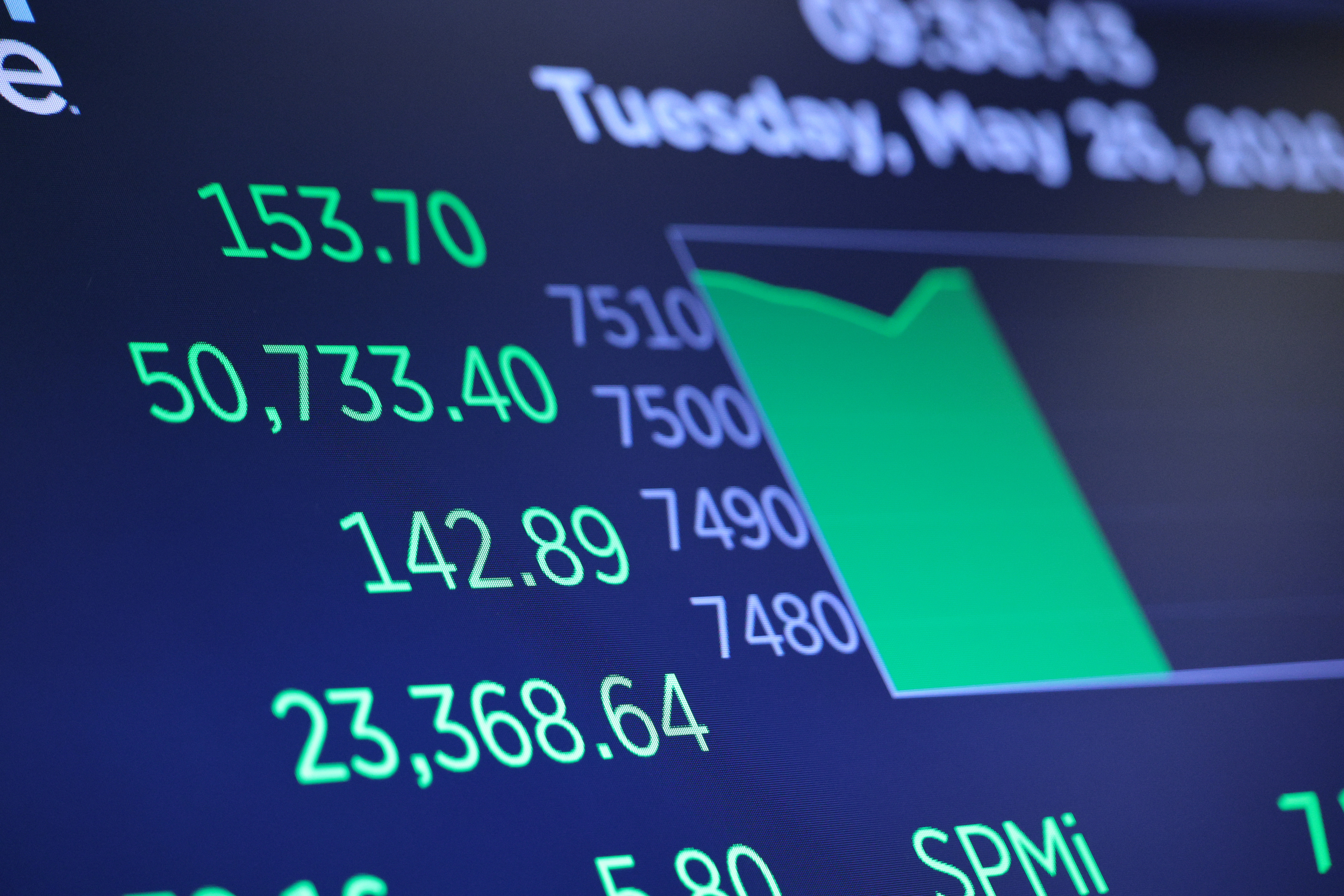
There's a growing disconnect on Wall Street that should worry anyone with a retirement account: the U.S. economy keeps delivering strong numbers, but the stock market isn't buying it.
The latest data shows robust consumer spending, steady job creation, and improving economic sentiment. GDP growth has exceeded forecasts. Unemployment remains near historic lows. By almost any traditional measure, the American economy is in solid shape. Yet the S&P 500 and Nasdaq have both slipped during June, and the gap between Main Street performance and Wall Street returns has become impossible to ignore.
The culprit, increasingly, is artificial intelligence — or more precisely, the capital being diverted into AI infrastructure at a scale that is reshaping how markets function.
A Reuters analysis highlighted the core problem: the companies driving the stock market's direction are now almost entirely AI-adjacent. Nvidia, Microsoft, Amazon, Alphabet, and Meta have collectively committed hundreds of billions of dollars to AI data centers, custom chips, and research. These commitments are so large that they're distorting traditional relationships between economic fundamentals and equity valuations.
The math is stark. Capital expenditure among the top five tech companies is projected to exceed billion in 2026, with the vast majority earmarked for AI infrastructure. That's more than the entire GDP of many developed nations. The question markets are now wrestling with is simple: will this spending generate returns that justify the investment, or is it a bubble that's consuming capital that would otherwise flow into broader economic growth?
So far, the revenue evidence is mixed. AI-related cloud services are growing rapidly — Microsoft's Azure AI revenue tripled year-over-year — but the total remains a fraction of the capital being deployed. The disconnect between spending and returns is widening, and investors are beginning to price in the possibility that a significant portion of AI infrastructure investment may not pay off for years, if ever.
This creates a peculiar dynamic. When AI companies report strong earnings, the market often sells off because the good news confirms that more spending will follow. When they report weakness, the market also sells off because it suggests the returns aren't materializing. It's a trap that traditional economic indicators don't capture well.
The ripple effects extend well beyond tech. Banks that finance data center construction, energy companies supplying power to AI facilities, and semiconductor equipment manufacturers are all riding the same wave. When AI spending catches a cold, a significant portion of the broader market sneezes.
There's also a macroeconomic dimension that's getting insufficient attention. The capital flowing into AI is capital that's not flowing into housing, small business lending, infrastructure, or consumer goods production. The opportunity cost of hundreds of billions being funneled into GPU clusters and server farms is real, even if it's diffuse. The housing market, for instance, continues to suffer from a lack of construction financing — not because money isn't available, but because the risk-adjusted returns from AI infrastructure make traditional lending look unattractive by comparison.
International markets are reading the same signals differently. European and Asian indices have been more cautious in their AI enthusiasm, leading to a divergence where U.S. markets are increasingly concentrated in a handful of AI-linked mega-caps while international markets maintain broader sectoral balance. For American investors with portfolio exposure heavily weighted toward S&P 500 index funds, that concentration risk is now significant — the top ten companies in the S&P 500 represent over 35% of the index's total value, a level of concentration not seen since the 1970s.
The bond market is sending its own warning. Credit spreads for AI-adjacent companies have tightened to historic lows, meaning investors are demanding virtually no premium for the risk that these companies' massive capital commitments might not pan out. When spreads are this tight, history suggests that a repricing is coming — the only question is when.
What This Means For You: If your retirement savings are in a standard S&P 500 index fund, you're more exposed to AI spending decisions than you probably realize. The concentration of the index in a handful of mega-cap tech companies means that a shift in AI sentiment could hit your portfolio hard, even if the broader economy remains strong. Consider diversifying into international index funds or sector-balanced ETFs that aren't as top-heavy. If you're a small business owner having trouble accessing credit, part of the reason may be that capital is being absorbed by AI infrastructure — talk to regional banks and credit unions, which are less influenced by the AI capital vortex than the major lenders.
Finance & Markets Editor
Originally sourced from International Business Times
Related Stories
Young Voters Squeezed by Economy, Distrust in Political System: Poll
A new Harvard Youth Poll paints a sobering picture of the economic and political landscape facing yo...
World shares are mixed and oil prices jump more than 3% after the UAE says it will exit OPEC
World shares are mixed following a retreat on Wall Street, and oil prices gained on Iran war uncerta...
World Bank warns the 2020s are becoming a \'lost decade\' for the global economy - \'barring a miracle\'
Global growth is now projected to slow to just\u00a02.5% in 2026, the weakest pace outside of outrig...